April 18, 2025

The myth of concrete languages

Whether railing against literary theories or the literary works in which they are realized, Julien Benda graces rhetoric with a proof per absurdum. His intention is, in effect, to show that our modern literature, incapable of conforming to rules and conventions, stuck in raw emotion, the purely carnal, and the individual—that its verbal orientation toward concrete particulars is analogous to "primitive" languages like the language of the Hurons, who have one word for eating rice, another for eating meat, another for eating fruit, and so on, but not one single word meaning to eat, nor words for infinite or absolute, and exhibit likewise a most peculiar lack of general ideas. To this, Benda opposes the faculty of abstraction: "the human race's great title to nobility," such as Rhetoric offers it to us.

The common thesis in which Benda participates here, and might well find sociologists to sustain it, is all too plain, its falsity easy to spot. After all—no less than modern writers—primitives have their own abstract ideas that are not ours (among which it is sufficient to name taboo, mana, and wakan). The primitive has then the right to say: "The French have ten words [for 'chicken']: poussin, poulet, poule, coq, and so on, where I have only one, akoho. What a pitifully concrete language! What a lack of abstract wit!"
     "But," the Frenchman will say, "I have a concept of the species, even if I lack the word."
     "And what makes you so sure I lack the concept of eating?" the Huron will reply.

The illusion that Benda obeys here is what I'll call the myth or mirage of concrete languages. It is the same illusion that causes foreign language, argot and technical usage to seem more "lively" and imagistic than our own, to the degree that they are foreign. (And indeed, it is upon their concrete side that we stumble first.)

"Julien Benda, or the Myth of Concrete Languages" (1953)
 by Jean Paulhan

March 25, 2025

Into the Tigris

Al-Hasan ibn Ja‘far said to me: I was told by ‘Abd Allah ibn Ibrahim al-Hariri that

Abu l-Khayr al-Daylami said: I was sitting with Khayr the Weaver when a woman came up and said, "I'm here for the kerchief I left with you." "Okay," he said, and gave it to her.
     "What do I owe you?" she asked. "Two dirhams," he said.
     "I don't have it on me right now," the woman said. "I'll bring it to you tomorrow, if God wills. But more than once I've passed by here and not found you."
      Khayr said to her, "If you bring it by and can't find me, just throw it in the Tigris River, and I'll pick it up when I get back."
     "Pick it up from the Tigris?" the woman asked. "How?"
     "Your curiosity goes too far," he said. "Just do as I've instructed."
     "If God wills," she said, and went away.

Abu l-Khayr said: I went back the next day, and Khayr was absent. Then along came the same woman, with two dirhams wrapped in a rag. Finding him gone, she sat down and waited for an hour, then stood up and flung the rag into the Tigris—where along came a crab, grabbed hold of the rag, and dove with it below the water's surface.
      An hour later, Khayr came back and opened the door to his shop, then crouched by the river's edge to wash his feet. And the crab emerged from the water and came toward him with the rag upon its back! And brought it close enough for Khayr to pick it up.
      I spoke. "I just saw...." He said, "I'd rather you not tell people about this while I'm alive," and I answered, "Okay."

From The Ornament of God's Friends by Abu Nu‘aym al-Isbahani

March 8, 2025

Fire's triple name

[T]he third ring [of Hell's seventh circle is] where he pictures the torments of the violent against Divinity. Just as violence can be committed in three ways, this form of violence is likewise divided in three: blasphemy, unnatural sex acts, and usury.

He pictures mortal sinners—blasphemers, sodomites, and brute fornicators—crisscrossing a field like the sandy plain of Libya trod by Cato. From his station at the edge of this field, or its outer bank, he says it is showered with flames like those Alexander witnessed raining on his army, which he and his armed battalions took care to smother. These flames represent the thoughts and impulses that fire up such infamies as the three sins under discussion here.

One blasphemer he mentions is Capaneus the king, who together with kings Adrastus, Tydeus, Polynices, Amphiaraus, Hippomedon, and Parthenopaeus went against Eteocles, king of Thebes, and mounted a seige against his city. The arrogance of Capaneus was so outsized that he railed against the gods as if they were men, above all Bacchus, god of Thebes. For this he was struck down and killed by Jove amid the fray, about which Statius says:

     Here then was Capaneus in a towering passion for war
     [....] a confirmed hater of the gods, and of justice

Against such blasphemers, David says [in Psalm 18 / II Samuel 22]: "Hail and coals of fire shot through the clouds that screened the brilliance in His glare [....] He sent His arrows out, and scattered them; He multiplied His bolts of lightning, and threw them into panic." And John in the second chapter of his letter [Nicholas Trevet in his commentary on Boethius's Consolation of Philosophy, 1.M4] says: "Persecution of the haughty is symbolized by a bolt of lightning, because hauteur, like lightning, originates on high." Blasphemy is a sin against the Holy Ghost, for which reason God in Leviticus says to Moses: "The man who curses his god shall bear his sin."

Capaneus's speech "If Jove should" etc. is a poetic expression of his hubris. His words about Jove's blacksmith, Vulcan, and how Jove pleads with him, engage the idiom in which Vulcan is poetically called the god of smiths, since no smith can forge metal without fire. It is said that Vulcan was born from Juno's thigh, and that he was hurled out of heaven by reason of his deformity, and landed on the island of Lemnos, which explains why he is called Lemnius. They say he was born of Juno's "thigh" because [air is Juno's realm, and] lightning is birthed from the bottom of the air. Thus says Lucan:

      Lightning sets ablaze the air that's closest to the earth

[Fire] is called by the triple name of Jupiter, Vulcan, and Vesta. Jupiter is the ethereal fire abiding in its own sphere, where it is simple and harmless. Vulcan is the lightning, the middle fire that causes harm, by which his name might be construed as "The Devouring Brilliance" (vorans candor > *Vorcan > Vulcan). And Vesta is the fire whose closeness we enjoy.

[Capaneus boasts that] if Vulcan and all the smiths of Aetna, whom the poets call Cyclopes or Telchines, were to blast him with their lightning, as at the battle of Phlegra, it would be futile. Phlegra was the site of the Gigantomachy, in or around Thessaly. If not for Vulcan and his smiths who munitioned Jove with lightning bolts and arrows, the Giants would have defeated him there. Statius mentions this battle in book two:

      Exactly thus did giant Briareus stand against
      the arms of Heaven, if you believe on Phlegra of the Getae

From Pietro Alighieri's Commentary on the Comedy of his Father Dante
(Inferno XIV.7–72)

March 4, 2025

Back in mauve


Thank you, James Sherry, for keeping
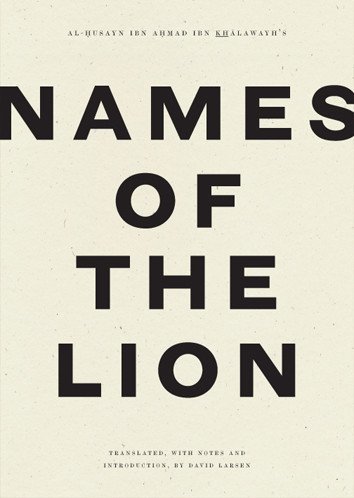
Zeroes Were Hollow (Kenning Editions, 2022)
before the public as a Roof Book!

Fair Misuse
Rear cover text by LRSN, animated by Josh Rigney

February 17, 2025

To bind and to gird


’zr (derived nouns izār and mi’zar),     
with an introduction on √’sr      


The root √’sr is used across the languages. Geʽez asara, Hebrew, Egyptian Aramaic, Old Aramaic, and Judeo-Aramaic asar, Syriac and Palestinian Christian Aramaic esar, Akkadian esēru, and Ugaritic asr and asīr all have the same meaning: "To bind and tie."
      In the Hebrew Bible, for example, we find asar in the absolute to mean "to tie, to restrain," and "to fix (the order of battle)," and metaphorically, "to bind oneself with a pledge," where that pledge is called issār. We also find the noun esūr "bonds," and consequently bēth hā-esūr "house of bonds," meaning "prison" (as at Jeremiah 37:15).
      Hebrew asīr is identical in form and meaning to Arabic asīr "prisoner." At Zechariah 9:12, this is metaphorical: asīrē hat-tiqwā are "prisoners of hope." And assīr is a dialectical variant with the same meaning.


The verb azar too occcurs throughout the Hebrew Bible, with the meaning "to gird (one's loins) with a loincloth," i.e., to secure the cloth around them, as an expression of self-preparation for some undertaking (Job 38:3, 40:7; Jeremiah 1:17). This is analogous to the Arabic phrase Shadda izārahu "He secured his loincloth," meaning that he tucked it around himself and made ready. The Hebrew verb appears in one place (Job 30:18) with the meaning "to constrict," meaning that his whole garment enwrapped him [as tightly] as a loincloth, and there is a metaphorical instance where they "gird themselves in might" (I Samuel 2:4), meaning that they arm themselves with power.
      The verb occurs additionally in its Niphal form (signifying one's passive girding by another); and its Piel form means to gird someone else with strength (in three places), joy (in one place), or, in the absolute, to support them and grant them victory (one place); its Hithpael form means to wrap the izār around oneself.
      Ezōr, the Hebrew equivalent of Arabic izār, is generally derived from the above verb, though de Lagarde traces both ezōr and izār to the root verb wazara. In fact these verbs are scarcely different in form and meaning, and for the etymology of "loincloth" in either language it is needless to resort to wazara, since azara is in common use while *wazara is unattested in Hebrew.
      Zimmern opines in the Gesenius-Buhl Handwörterbuch that Hebrew ezōr derived from esōr—an archaic reflex of the verb asar discussed above, in which /s/ has metathesized into /z/—and furthermore that the verb azar stems from it. This a strange theory, because azar is attested in so many forms and senses in Hebrew, and this is uncharacteristic of denomimal verbs.
      In support of Zimmern's claim that asar "to bind" came before azar "to gird," one word for "loincloth" in Syriac is esārā, and in the Old Babylonian Mari Tablets there occurs mīsarrum, and later on mēseru, which mean the same. But Syriac has two rare words for "loincloth" that do derive from √’zr: īzrā and mīzrā (the exact equivalent of Arabic mi’zar), and a third, mīzrānā, which is more common. These three nouns raise the possiblity that the verb *azar, which is unattested in Syriac, may at one time have been been present alongside asar, which is attested.


In summary. (1) Arabic and Hebrew both use azar(a) "to gird with a loincloth" in one sense or another, from which various nominal forms signifying "loincloth" are derived. For other forms of binding and tying, they use derivatives of √’sr.
      (2) In the Akkadian language, words for "loincloth" are derived from √’sr, which signifies binding and tying in general, and the root √’zr is not present.
      (3) In Syriac, the verb *azar is not used, although three nominal derivatives of √’zr are attested, indicating that *azar may have been in use at some early stage of the language. There are Syriac words for "loincloth" derived from √’sr as well.
      In Arabic and Hebrew, the terms are more specific than in Akkadian, where "to gird" and "to bind" are signified by the same verb. In Syriac, meanwhile, there is oscillation between the two roots.
      In another Semitic language, namely Ugaritic, "loincloth" is signified by mẻzrt or mỉzrt, which occurs several times in the Tale of Aqhat, and once in the Baal Cycle. Furthermore, the verb ủzr occurs numerous times in the Tale of Aqhat with the apparent meaning "to secure one's loincloth," although there is disagreement on this among scholars [....]
      In conclusion, we find cognates for Arabic azara in Hebrew and Ugaritic, and nominal forms deriving from this verb in Syriac, though not the verb itself. In Syriac and Akkadian, "to bind" and "to gird" are signified equally by forms of √’sr, which has a broader range of meanings than √’zr. While these roots are close in meaning and phonetic makeup, the root √’zr is dedicated in certain Semitic languages to the securing of a loincloth, which may yet be signified by √’sr, the root of binding and tying in general.

Al-Sayyid Ya‘qub Bakr, "Comparative Studies on the Arabic Lexicon
(1–30)." Bulletin of the Faculty of Arts of the University of Cairo
20:2 (1958), 305–9 (No. 8)

January 31, 2025

Two palms of Hulwan

I am informed by my uncle, on the authority of al-Hasan, who heard from Ahmad ibn Abi Tahir that ‘Abd Allah ibn Abi Sa‘d was informed by Muhammad ibn al-Fadl al-Hashimi that Sallam al-Abrash said:

Harun al-Rashid set out for Tus, but when he got as far as Hulwan, he started having heart palpitations. His doctor ordered him to dine on heart of palm, and so he called upon the dehqan of the place and asked for some. The dehqan informed him that no palm trees grew in that area, but that along the mountain pass there stood two palms. "Give the order, and we'll cut one down for you." And it was done.
      The palm's heart was brought to al-Rashid, who felt better as soon as he ate it. But when he [resumed his journey, and] reached the mountain pass, he saw the palms, one chopped down and the other standing. And on the upright palm were written these lines (meter: khafīf):

      To my aid in bitter times I call
          the two palms of Hulwan to weep with me.
      I call on you and warn you
          of the evil fate to come and separate you.

This pained al-Rashid. "I am ashamed to be the instrument of that fate," he said. "If I had only heard this poem, I wouldn't have cut this palm. I would have died before letting this happen."

Al-Hasan ibn ‘Ali told me that al-Harithi ibn Abi Usamah said: I was told by Muhammad ibn Abi Muhammad al-Qaysi that Abu Sumayr ‘Abd Allah ibn Ayyub said:

When [Harun al-Rashid's father, the Caliph] al-Mahdi traveled the pass of Hulwan, he was so enchanted with the place that he stopped for a picnic. He called to Hasanah: "See how nice this is? Sing my life away for me, while I drink a few tumblers of wine." Hasanah took the body brush she was holding and thumped it against a cushion as she sang (meter: ṭawīl):

      Two palms of Wadi Buwanah, I hail thee
          while the grove-keeper is careless of your enclosure!

"Brava!" he said. "I was thinking of having them cut down"—meaning the two palms of Hulwan—"but your song stays my hand."
     "God forbid!" cried Hasanah. "May God protect me from the Commander of the Faithful, if you are ever the instrument of their evil fate!"
     "What fate is that?" the Caliph asked, and she began to sing the verses of Muti‘ ibn Iyas. When she got to the verse:

      I call on you and warn you
          of the evil fate to come and separate you

he said, "Brava! By God, your words have put me on notice. I will never cut these two down. In fact, I'll appoint a keeper, to tend and water them both as long as I shall live." He gave the order for this on the spot, and for the rest of al-Mahdi's life the decree was carried out.

From the Book of Songs

January 12, 2025

If in Palo Alto

A flyer announcing David Larsen's talk at Stanford University on Wednesday, 15 January, in room 252 of Pigott Hall. The flyer image shows a male figure wearing a tunic and close-fitting cap, lifting a hammer with his right hand, and holding a piece of metal to an anvil with his left.