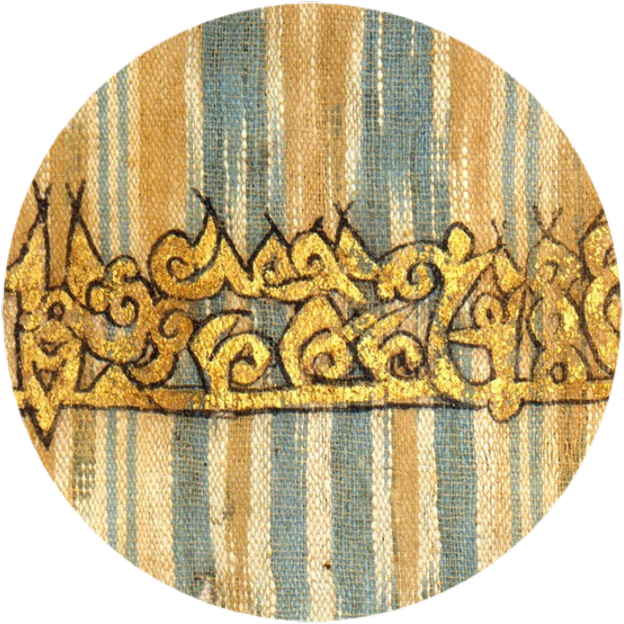


and festival days, the sultan would ride into the square with a yellow caparison of gold-embroidered silk satin covering the head and neck of his horse from its ears down to the pommel of his saddle, preceded by two grooms of his stables mounted on white stallions, each one caparisoned in the same fashion as the sultan's, as if for the sultan to ride, each groom in yellow silk inscribed with embroidered bands of gold, the caps on their heads embroidered also, as was the leather cover of the sultan's saddle, in gold filigree carried before him by an unmounted footman at the middle of the cortège, behind a mounted piper on a flute in tones inspiring no merriment in the hearer but solemn awe, while in the rear was led a troop of riderless horses, and above the sultan's head floated his standards of yellow silk satin embroidered with his name and titles in gold thread.
From the Consummation of the Arts of Veterinary Medicine and Hippiatry of Abu Bakr ibn Badr al-Din Mundhir, known as al-Baytar
(not to be confused with Ibn al-Baytar the medical writer of al-Andalus)
Repeated word for word in al-Maqrizi's Book of Admonitions and Considerations in Commemoration of the Plans of [Egypt's] Cities and their Material Remains